How to Prevent Standing Water and Mold Around Your Pool and Patio Area
It is possible for a pool to be clean while a patio near it has a different tale to tell. There could be a puddle by in the corner of the patio that won't dry, dark stains on your chairs, or the pavers turning green due to moisture. This is not only an aesthetic problem. Moisture that cannot escape becomes a risk of creating slip hazards, staining things, and allowing for mold growth. And before you know it, these become a recurring problem.
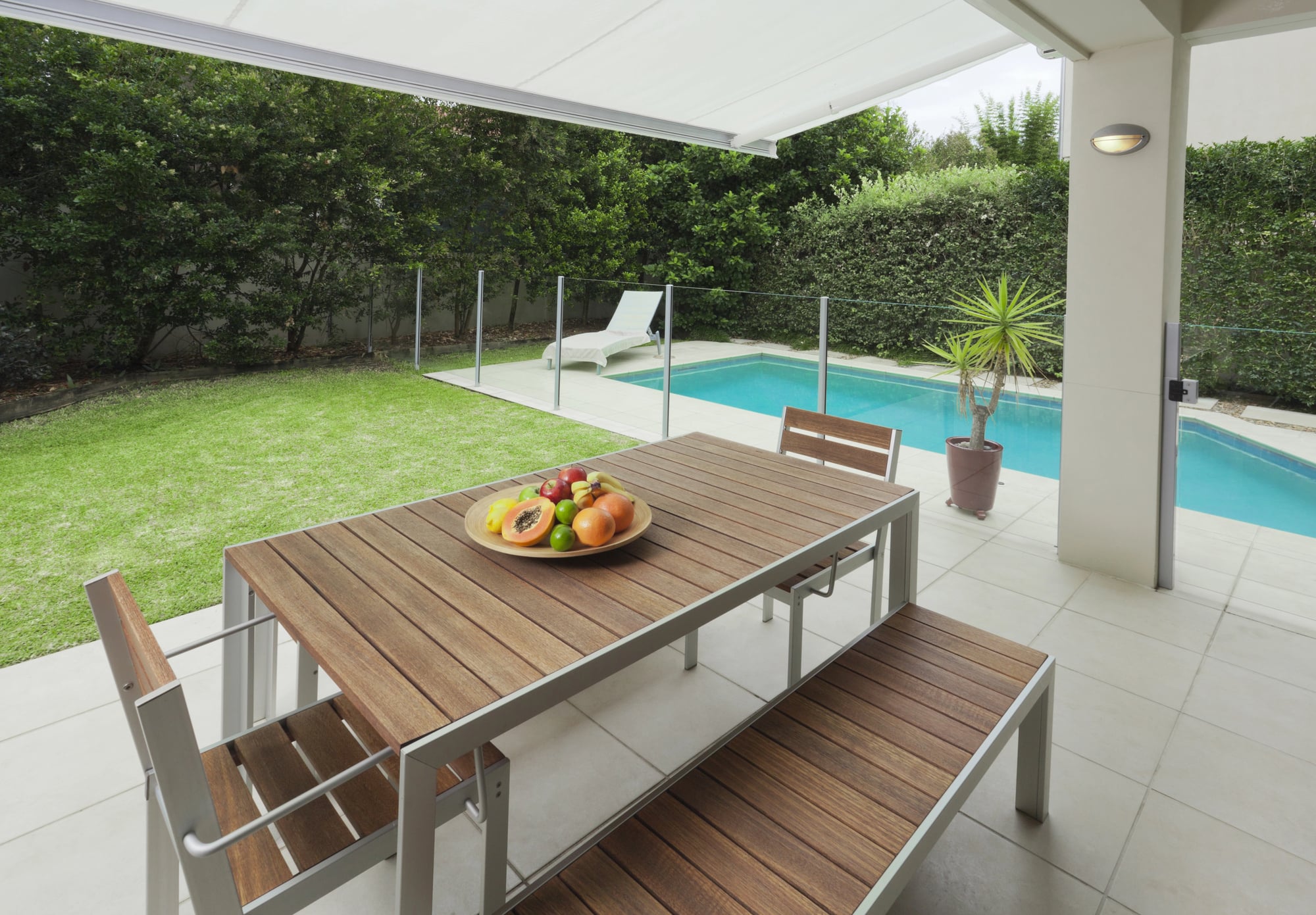
The good news? You do not need to tear up the whole patio. First, figure out where the water is coming from and why it is not drying.
Start with the pool, then look beyond it
Pool water brings its own cleaning demands. Leaves, dirt, and algae can settle on the floor and cling to the walls, especially when the pool is surrounded by trees. Establishing a routine to care for pool floors and walls ensures the interior surfaces stay clear of buildup while keeping the water thoroughly filtered.
That does not solve a patio drainage problem, however. Pool water on the deck, rainwater from the roof, and runoff from the yard all need their own path away from the house and pool.
It is worth taking this seriously. In 2026, the U.S. Consumer Product Safety Commission reported an average of 5,900 pool- or spa-related nonfatal drowning injuries treated in emergency departments each year from 2023 through 2025. Wet, slippery areas around a pool are another reason to keep the entire pool zone in good condition, not just the water itself. The 2026 CPSC report also found that more than 70% of fatal child drownings between 2021 and 2023 occurred in residential settings.
Find the spot where water gets stuck
Walk around the patio after a heavy rain. Do not just look at the biggest puddle. Watch the water while it is moving.
Does it run toward the house? Does it collect where the patio meets the lawn? Does water spill from a downspout onto the same corner every time?
Those clues can tell you a lot.
One of the causes may be the formation of a depression that results from settling of the soil or base material beneath the patio. The other reason may be poor grading. The pool deck should be graded to ensure that water drains away from the pool or towards a drain. According to the 2024 International Swimming Pool and Spa Code, there are different minimum slopes, which vary with the surface being used, such as ⅛ inch per foot for residential travertine or brick set pavers and ⅛ inch per foot for textured hand-finished concrete. Please note that local codes can differ, so check the requirements that apply where you live.
Blocked drains are another simple possibility. Lift the grate, if it is designed to be removed safely, and clear out leaves, dirt, and other debris. Check that water actually moves through the outlet. If it backs up again quickly, the problem may be farther down the drainage line.
Give runoff somewhere sensible to go
To your surprise, you'll find that sometimes it turns out that the solution to the problem is quite simple. The downspout may just be sending water from the roof near the patio. Extending the pipe will ensure that the water is drained properly.
For water that crosses the surface in a broad sheet, a linear channel drain can collect it before it reaches the lowest point. These narrow drains are especially useful along the edge of a patio or in other places where water naturally travels.
If the problem is coming from the soil, a French drain may be more appropriate. It uses a gravel-filled trench and perforated pipe to collect and move subsurface water. This is not a good place to guess about underground utilities or property drainage, so professional advice is sensible when excavation is involved.
And if a concrete slab has visibly sunk, adding another drain may not be enough. The surface itself may need to be raised or rebuilt so water can follow the intended slope.
Keep damp areas from becoming moldy
Mold control starts with moisture control. The EPA's guidance is simple: wet or damp areas should be dried within 24 to 48 hours when possible, and the source of the water problem should be fixed.
That principle works well around outdoor living spaces too. Do not allow leaves, grass clippings, and other organic debris to sit in wet corners. Sweep the patio regularly, especially after storms. Keep shrubs from pressing tightly against shaded surfaces, and make sure furniture is not creating permanently damp spots.
Be careful with cleaning products, too. Bleach is not automatically the best answer for every outdoor surface. Follow the manufacturer's instructions for your patio material and cleaner, and never mix cleaning chemicals.
Standing water is likely to attract mosquitoes. Culex mosquitoes lay their eggs in fresh or stagnant water, and unmaintained swimming pools are mentioned as potential breeding areas in CDC guidelines. CDC's September 2025 guidance makes removing or managing standing water part of mosquito control.
A simple routine makes a big difference
You do not need a complicated calendar. After heavy rain, check areas where water has collected before. Once a week, clear leaves and debris from drains, gutters, and low spots. During the swimming season, keep the pool itself clean and watch for algae or debris building up on the floor and walls.
If a puddle appears in exactly the same place every time, stop treating it as a cleaning problem. It is probably a drainage problem.
That is the real key to a drier, cleaner pool area. Keep the pool clean, keep drains open, give runoff somewhere to go, and deal with damp spots before they become permanent. A few minutes of checking the patio after a storm can save you from a much bigger repair later.